Hello, and welcome to America’s First Ladies. I’m your host, Risa Weaver-Enion.
Episode 3.7 A Nomadic Life
We left off last week in 1818. Martha had given birth to her 12th and final child in March, and she was still living at Monticello with her father, most of her children, and sometimes her husband. Martha lives for another 18 years, but they’re going to be hard years. She loses several of her children, her father, and her husband. And she loses her beloved home, Monticello. But let’s not get ahead of ourselves. This episode runs a little longer than usual, because we’re going to wrap up Martha Jefferson today.
1819 kicked off with some pretty serious family drama when Anne’s husband Charles stabbed her brother Jeff in downtown Charlottesville. Charles was arrested, but then released, and amazingly never stood trial. Jeff recovered from his wounds, but spent several days under a physician’s care before he could return home.
Martha was ill most of 1819 and 1820, definitely with menopause symptoms, and possibly with other afflictions as well. She was suffering from debilitating headaches and “violent palpitations of the heart, spasms in my limbs and back, and frequent fevers.” In 1822 she wrote to her sister-in-law Virginia, “For more than two years I have been in that state between comfortable feelings, and positive illness, which necessarily induces apathy, listlessness, and all those ideal propensities that unfit us for the proper discharge of our duties.”
Because of Martha’s frequent inability to oversee the household at Monticello, her daughters still at home took over more of that responsibility on a rotating basis. In 1818, Ellen was 22, Cornelia was 19, Virginia was 17 and Mary was 15. None of them was particularly happy about taking on more household management duties. Virginia wrote that “I had rather read than sew or keep-house.” Cornelia complained about the “numberless variety of orders & directions to be recollected and given [to the staff].”
As Martha stepped back from household management duties, she found herself more occupied with being her father’s gatekeeper and hostess at Monticello. Thomas continued to be inundated with requests for visits by admirers and well-wishers. Once he returned to Monticello after leaving the presidency, he rarely left it again, so people had to come to him if they wanted to see him. In prior years, he handled the primary hosting duties of entertaining guests in the afternoon and evening, while Martha was busy with the children and the house. But now the children were mostly grown up and overseeing the house themselves, and Thomas needed more time to rest in between meals and entertaining. So Martha was primarily responsible for taking care of any visiting guests and keeping them occupied.
1819 also saw a pretty serious financial crisis unfolding in America, which I’m going to cover as briefly as possible. I think you’ll see some parallels with more recent financial crises within our own lifetimes. After the War of 1812 ended, there were several boom years that saw a bevy of banks spring up, easy credit being extended to borrowers, and inflated paper currency issued.
Thomas Jefferson had signed as guarantor on a $20,000 loan taken out by Jeff’s father-in-law, Wilson Nicholas. When the credit market crashed in 1819, the bank asked Nicholas to repay part of the loan, which he couldn’t do, even after selling all his property. When Nicholas died penniless in 1820, the responsibility for the $20,000 debt, plus $1200 a year in interest, fell to Jefferson. But he also could not afford to pay that, even after selling some lands, because land prices were so low. For context, $20,000 in 1818 would be worth just over $510,000 in 2025. And $1200 annual interest would be more than 30,000 2025 dollars.
This was just one more nail in the coffin of Thomas Jefferson’s financial ruin. As Cynthia Kierner writes in Martha Jefferson Randolph: Daughter of Monticello, “Like many other Americans, especially outside the commercial Northeast, members of the Monticello family blamed the banks for the financial crisis and the suffering it caused, especially for rural people. Although they were willing to accept credit from banks when they needed it before the crash, now Martha and her father condemned lenders for encouraging extravagance and debt by creating artificial wealth. The banks’ system of easy but unstable credit, they observed disapprovingly, was tantamount to gambling. By bringing financial ruin to individual citizens and their families, overreliance on credit and speculation, they feared, would ‘ruin the country.’”
The more things change, the more they stay the same.
Tom Randolph’s finances were also in continued trouble into the 1820s. He kept trying to sell Varina, but couldn’t find any buyers. He was desperate enough to sell two of his Edgehill slaves to help make ends meet. And then he inexplicably got back into politics, first as a state assembly member for Albemarle County, and then as governor of Virginia. At that time, the governor was still appointed by the legislature, as you may recall from episode 3.2 when Thomas Jefferson was selected by the legislature to be governor in 1779.
So technically, that made Martha First Lady of Virginia, but that title still wasn’t in use, for presidents’ wives or for governors’ wives. Martha didn’t even bother going to live with Tom in the Governor’s Mansion in Richmond, except for a short visit over the winter of 1820-21. Tom served three consecutive one-year terms as governor, being appointed in December of 1819, 1820, and 1821. Over those three terms as governor, he earned a total of $10,000, but it still wasn’t enough to pay off his various debts, many of which were still holdovers from his dead father’s estate.
Tom’s residence in Richmond, which was the social capital of Virginia as well as the political capital, was an advantage for his unmarried daughters Ellen, Cornelia, and Virginia. They also spent time in the nation’s capital of Washington, where their aunt Mary Randolph had opened a boardinghouse. Between the two capital cities, the girls were able to meet and socialize with many eligible bachelors, but they attracted no proposals. Instead, Ellen and Virginia ended up marrying men they had met at home at Monticello.
In spring 1824, a young man named Joseph Coolidge visited Monticello to meet the famous Thomas Jefferson. He and Ellen met then, and ended up falling in love. They were married on May 27, 1825. And on September 11, 1824, Virginia and Nicholas Trist were finally married after a very long engagement. You’ll recall from episode 3.6 that they wanted to get married as early as 1818, but Martha deemed them to be too young. By 1824, Virginia was 23 and Nicholas was 24, and they had stayed attached to each other for more than six years. Nicholas was studying law under Thomas Jefferson, so Martha was happy that her newly married daughter would be staying at Monticello.
Ellen, on the other hand, moved to Boston with her new husband, which was the more traditional outcome of marriage. Despite losing her daughter to the Northeast, Martha was happy with the marriage. As Cynthia Kierner writes, “Martha admired Joseph’s intelligence and his good manners. She rejoiced that Ellen, at age twenty-nine, had found such a loving and prosperous husband.”
After finishing his terms as governor in late 1822, Tom Randolph served two more years in the assembly, and then more or less returned to private life at Monticello around 1824. It was only then that Martha became aware of the full extent of his debts, some $33,000, or over $1.1 million in 2025 money.
In April 1824, Jeff Randolph, who had proved to be an adept farmer and businessman, assumed his father’s debts in exchange for the deeds to Edgehill and Varina, and all the slaves on both properties. This created a great rift between father and son, and eventually led Martha and Tom’s marriage to all but collapse, because Martha often supported and sided with her son against her husband.
The final straw for Tom came when Jeff decided to sell Edgehill and Varina to pay down the debts, and Martha supported Jeff’s decision. Tom felt that Martha and Jeff were prioritizing saving Monticello over saving their own family estates, and he was probably right. By the end of 1824, Tom was no longer living at Monticello, and he and Martha would never live together again.
In December 1825, Tom’s beloved estate of Edgehill was sold at auction, and it was purchased by none other than his son, Jeff Randolph. Many of the slaves were auctioned as well, some of whom ended up being sold to cotton plantations in the Deep South.
Around the same time, Thomas Jefferson came up with an idea to raise money to pay off his debts. He wanted to hold a lottery to dispose of some of his land and personal property, selling tickets to the general public. He hoped to preserve family ownership of Monticello through this scheme, but it was not to be. The Virginia legislature had to approve the lottery, and they would only grant the sale of $60,000 worth of tickets if the prize offered was worth the same sum. The only way to do that would be to include Monticello in the prize.
Turning to Cynthia Kierner again, “A friend reported that Jefferson ‘turned quite white’ when he learned of that condition, which meant that the family would necessarily lose Monticello. Although the old man would be able to stay in his house until he died, Martha and the children would have to leave no more than two years later. Having no viable alternatives, Martha became resigned to the eventual loss of her childhood home. … [S]he had no choice but to trust [that the lottery] would raise enough money to pay her father’s debts and provide ‘a maintenance for the family, the means of educating the boys, and a home for my self and children.’”
1826 was a year of births and deaths in the Jefferson-Randolph family. In February, Anne Randolph Bankhead died at age 35 from complications due to childbirth. Her death hit the family hard. Martha and Tom had lost their first-born child, and Thomas lost his first-born grandchild. Anne’s siblings were also distraught. Anne had four surviving children, including the infant born just before she died. Her 13-year old daughter Ellen and the infant, William, came to live at Monticello and be cared for by their grandmother and aunts.
Meanwhile, Ellen Randolph Coolidge was due to give birth in the spring of 1826, as was Virginia Randolph Trist. Cornelia traveled north to Boston to be with Ellen after the birth of her daughter, also named Ellen. Virginia gave birth at Monticello, also to a daughter, whom they named Martha in honor of her grandmother.
In the summer of 1826, knowing that death was near, Thomas Jefferson revised his will. He wanted to leave his estate to Martha, his sole surviving child, but because she was married, anything she inherited would legally be Tom’s, and could be seized to pay his debts. So instead, Jefferson left the estate to his grandson Jeff, to hold in trust on Martha’s behalf until Tom died, at which point everything would go directly to Martha.
As we learned in season 2, Thomas Jefferson and John Adams died on the same day, within hours of each other, on July 4, 1826, the 50th anniversary of the approval of the text of the Declaration of Independence, which Jefferson wrote and which Adams played such a key role in getting approved. In my opinion, it’s the most remarkable coincidence in American history.
Under the terms of his will, Jefferson freed several of his slaves, including his longtime personal servant Burwell Colbert. He also stipulated that Sally Hemings’s two younger children, James Madison and Thomas Eston, should be freed when they turned 21. A few years earlier, Jefferson had essentially freed Sally’s eldest two children, William Beverly and Harriet, when he allowed them to run away. They were both light-skinned and went north to assimilate into white society.
You’ll recall that Sally herself was three-quarters white, because her father was white and her mother Betty was half-white. And of course Thomas Jefferson was white, so his children with Sally Hemings were only 1/8 Black, which was enough to make them Black (and slaves) in the eyes of 19th century law, but little enough that they could pass as white.
Jefferson had previously freed Sally’s brothers, James and Robert, in the 1790s. As for Sally herself, Jefferson apparently felt that he couldn’t name her directly in his will, because that would bring unwanted attention to their relationship. Additionally, Virginia law required that any freed slaves had to leave the state within a year. As a 53-year-old woman, Sally did not have any skills that would enable her to petition the Virginia legislature to remain in the state, nor was she really young enough to start over somewhere else.
It’s likely that Martha and her father had a private conversation about what to do about Sally, because after Jefferson died, Sally, Madison, and Eston left Monticello and went to live in de facto freedom in nearby Charlottesville. Sally technically belonged to Martha after Jefferson’s death, but Martha left directions in her own will that if she died before Sally, Sally was to be “given her time,” which meant she was to be left to live out her days in freedom, which she did until she died in 1835.
Thomas Jefferson was buried next to his wife in the family graveyard at Monticello.
With her father now dead, her estranged husband living on a small plot of land by himself, and her home about to be taken away from her, Martha was at loose ends in mid-1826. In October, she was convinced to travel to Boston for a visit with Ellen, Joseph, and their baby. She took 12-year-old Septimia and 8-year-old George with her. Virginia, Nicholas, their baby, Cornelia, and Mary remained at Monticello, which Jeff expected would be sold off while Martha was away.
I’ll turn to Cynthia Kierner once again to summarize the state of affairs the Jefferson-Randolphs were in:
“Money was a constant problem that Martha and her relatives addressed with a hodgepodge of old-fashioned and modern strategies. On the one hand, in a manner reminiscent of the personal and influence-laden politics of the colonial era, which her father excoriated but nonetheless practiced to some extent, Martha gratefully accepted—and sometimes even sought—official assistance in the form of subsidies, land grants, and political or military appointments (for her sons or son-in-law) from national or state governments.
On the other hand, in this age of democracy and self-improvement, she also did her best to give her sons the education they needed to become self-made men and to increase her daughters’ chances to meet prospective spouses, even as she pondered new ways to generate income for her troubled family. Like many Americans, the Randolphs were on the move by the 1820s, in search of new opportunities. But the social, economic, and geographic fluidity that for many brought upward mobility signified a seemingly downward spiral for Martha. Her children, unlike her, would begin their adult lives without property in a world where their famous grandfather and once-enviable gentry lineage would be less tangible assets than curiosities.”
Martha spent 18 months living in Boston with the Coolidges. It was her first taste of urban life since her visit to Richmond in 1820 when Tom was governor, and it was the first time she had left Virginia since her father retired from the presidency. She was depressed about the state of her family’s affairs, writing that she had experienced a “complete prostration of health, strength, and spirits” after leaving Virginia. She told her son Jeff that she was incapable of imagining “the possibility of better days.”
But Martha was respected and admired in Boston society. The wife of Boston’s mayor wrote that “Mrs. Randolph must always command the respect of all who know her.” Martha attended the theater and went to parties during her time in Boston, as well as enjoying time with Ellen and her growing family.
In May 1827, Joseph Coolidge rented a house in Cambridge, where the family decamped for the summer. Ellen was pregnant with her third child, and living in a rented home in “the country” allowed her freedom from housekeeping and making visits. Cornelia came north from Virginia to spend time with her mother and sister. Martha and Septimia bounced between Cambridge and Boson until May 1828, when Martha decided to return to Virginia.
Monticello still hadn’t sold, and Virginia and Nicholas were still living there. Tom Randolph had traveled to Georgia for a surveyor’s job for several years, but he was now back in Albemarle County, and wishing for a reconciliation with his wife. He also was ill, and asked to be allowed to live at Monticello once again.
Martha, Cornelia, and Septimia left Boston on May 1, leaving George behind at his Boston boarding school. They took a ship to New York, then traveled overland via Philadelphia, Norfolk, and Richmond, arriving at Jeff’s house at Edgehill some weeks later. They then went to Monticello to see Tom, who was sicker than any of them realized. Cornelia wrote to Ellen, “I was so shocked when I saw him looking so pale & haggard that I forgot every thing for the moment but the filial feeling I used to have so warmly. We have never seen him look as he does now.”
Tom Randolph died a short time later, on June 20, 1828, at the age of 60. Martha was now a widow. She wrote to Ellen that Tom had reconciled with Jeff before he died and that he “spoke of me as his adored wife, and his children with great affection generally. … All was forgotten but the sufferings, and repentance of the sufferer.”
After the initial grief at Tom’s death, the family resettled into life without him, which they had been more or less living for several years by that point. Martha wrote, “No chair at a table recalled him at meals, no part of the house was associated with his ideas, and we could not but acknowledge that all was for the best.”
In November 1828, Nicholas Trist moved to Washington after accepting a position with Secretary of State Henry Clay. The idea was for Virginia, Martha, and her three unmarried daughters (Cornelia, Mary, and Septimia) to join him there, but money was still a problem. So for the time being, the women moved into Jeff’s house at Edgehill. George was still in boarding school in Boston, and the older boys were either in college or working.
Mind you, Jeff and his wife Jane had eight children by this point, so Edgehill wasn’t exactly overflowing with space. Martha tried to ease the burden by making extended visits to friends and relatives throughout Virginia. Finally, toward the end of 1829, Martha prepared to move from Virginia to Washington, saying goodbye to Virginia friends she might never see again. Her lifelong friend, Nicholas Trist’s grandmother Elizabeth, died in December that year, as did her widowed aunt Anna Jefferson Marks, who had been living at Monticello for decades as part of the extended family.
Upon arriving in Washington, Martha found a very different city than the one she had left in 1806 during her father’s second term as president. The population was now 19,000, and it was the ninth largest city in the U.S. There were also way more shops and artisans, which meant people didn’t have to go to Philadelphia to buy everything they needed or to have a dress or a hat made.
Martha socialized quite a bit, and was honored when the de facto First Lady, Andrew Jackson’s niece-in-law Emily Donelson, paid her a visit. (Side note: we’ll learn more about Emily Donelson in season seven.) Martha then returned the visit, which meant she was back in the President’s House for the first time since 1806. The house had been burned by the British during the War of 1812, which we’ll hear more about next season when we discuss Dolley and James Madison. The house had been painted white after the damage, finally earning it the name we know it by: The White House.
As the daughter of Thomas Jefferson, Martha found herself in demand in Washington society. President Andrew Jackson even paid her a visit, along with his new Secretary of State, Martin Van Buren. As Cynthia Kierner describes, “While decades earlier Martha had been a validating accessory for her sometimes controversial father, now the deceased Jefferson was her ticket into the highest social circles in the capital. …Both Van Buren and Jackson assiduously courted Martha, inviting her to formal dinners, where she invariably took precedence over all the other women in attendance. … According to Virginia Trist, her mother was the center of attention, while she and her sisters were ‘little fish…and do not approach her foot stool…only getting a peep at Mama through the platinum ornaments every now & then.’”
President Jackson bestowed several important positions on Martha’s family, appointing 13-year-old George as a midshipman in the U.S. Navy, despite his youth, and appointing Nicholas Trist as his private secretary.
Throughout the early 1830s, Martha was on the move. She spent two months in the autumn of 1831 at Edgehill with Jeff and his family, and then returned to Washington. By this point, her 21-year-old son Meriwether Lewis (who went by Lewis) was living with the Trists in Washington, as were Anne’s four children, whose father had remarried.
President Jackson continued to bestow favors on the family, giving Lewis a government clerkship in 1831, and then appointing him as secretary to the governor of the Arkansas Territory in 1835. By that point, Lewis was actually part of the extended Jackson family, after he married Emily Donelson’s niece.
In July 1832, Martha went to Boston to visit Ellen and her family. She ended up staying for 10 months, not returning to Washington until the following summer, at which point she went to Edgehill and stayed from August 1833 until December 1834.
Nicholas Trist was chosen to be the American consul in Havana, Cuba in 1833, which meant the Trist family would eventually move to Cuba. Also in 1833, Monticello was finally sold, an event that was so traumatic for Martha, she was physically ill throughout the negotiation process. The sale didn’t generate nearly as much money as the family had hoped it would, primarily because the house was in disrepair and required a great deal of investment to bring it back to its old glory. Also, it was expensive to run a large plantation, and the tobacco industry was not what it had been in the 18th century.
While Martha was staying at Edgehill, she lost another of her adult children when 28-year-old James died suddenly in January 1834. James had joined the family at Edgehill a short time earlier after losing his small farm. James’s death hit Martha hard, and Virginia Trist wrote that Martha’s health was “far from good [and] so delicate [that] the least trifle…gives her a fever.”
By summer 1834 Martha was coming out of her depression, and was enjoying the bounty of family around her. Ellen and her family came for a visit from Boston, so Martha had most of her living children with her, plus Jeff’s children, Virginia’s children, and Ellen’s children. In all, there were 25 members of the family in residence at Edgehill. Later that fall, her son Benjamin Franklin Randolph, who went by Ben, married a local girl named Sally Champe Carter, leaving Cornelia, Septimia, Mary, and George as the only unmarried Randolph offspring.
In December 1834 Martha returned to Washington, to a house she and Nicholas Trist had jointly purchased in June 1833. They had been renting the house to tenants during Martha’s time away because it was more economical for her to live with family and rent the house than it was to live in the house herself. But over the winter of 1834-35, Martha enjoyed living in the house with Virginia and her children, Ellen and her children, Cornelia, Septimia, Mary, and even George when we was between naval assignments.
In March 1835, Martha fell very ill and the family feared for her life. She recovered after a few weeks, but then fell ill again in April. Virginia wrote that the family “await the crisis with the alternations of hope and fear which are natural.” Martha was so convinced she was on her deathbed that she dictated a will and gave Virginia instructions on how to disperse her property, small as it was.
But then Martha suddenly recovered a few days later. She had been weakened by her successive illnesses, and the family agreed that it wasn’t prudent for her to be living on her own. Virginia and her children were on the verge of joining Nicholas in Cuba, so Ellen and Joseph Coolidge invited Martha to Boston to live with them.
Martha, Mary, and Septimia left Washington at the end of June 1835. Ben escorted them first to Baltimore, then to Philadelphia, and finally on a train journey from Providence, Rhode Island to Boston. The railroad was still new in 1835, and it was everyone’s first time on a train. Mary wrote that they were “crowded into a little car next to the engine” where sparks could fly at them and singe their clothes. But when they had to change trains due to a change in the gauge of the railroad track, they were able to find more comfortable seats and “finished the ride very pleasantly.”
Martha spent most of the next year in Boston with the Coolidges, but her health fluctuated. She disliked being separated from her children, even though she had three of them with her in Boston. She wrote to Virginia that she didn’t have the strength to bear “the repeated separations I seem doomed to experience…I feel no interest in the present or hope for the future.”
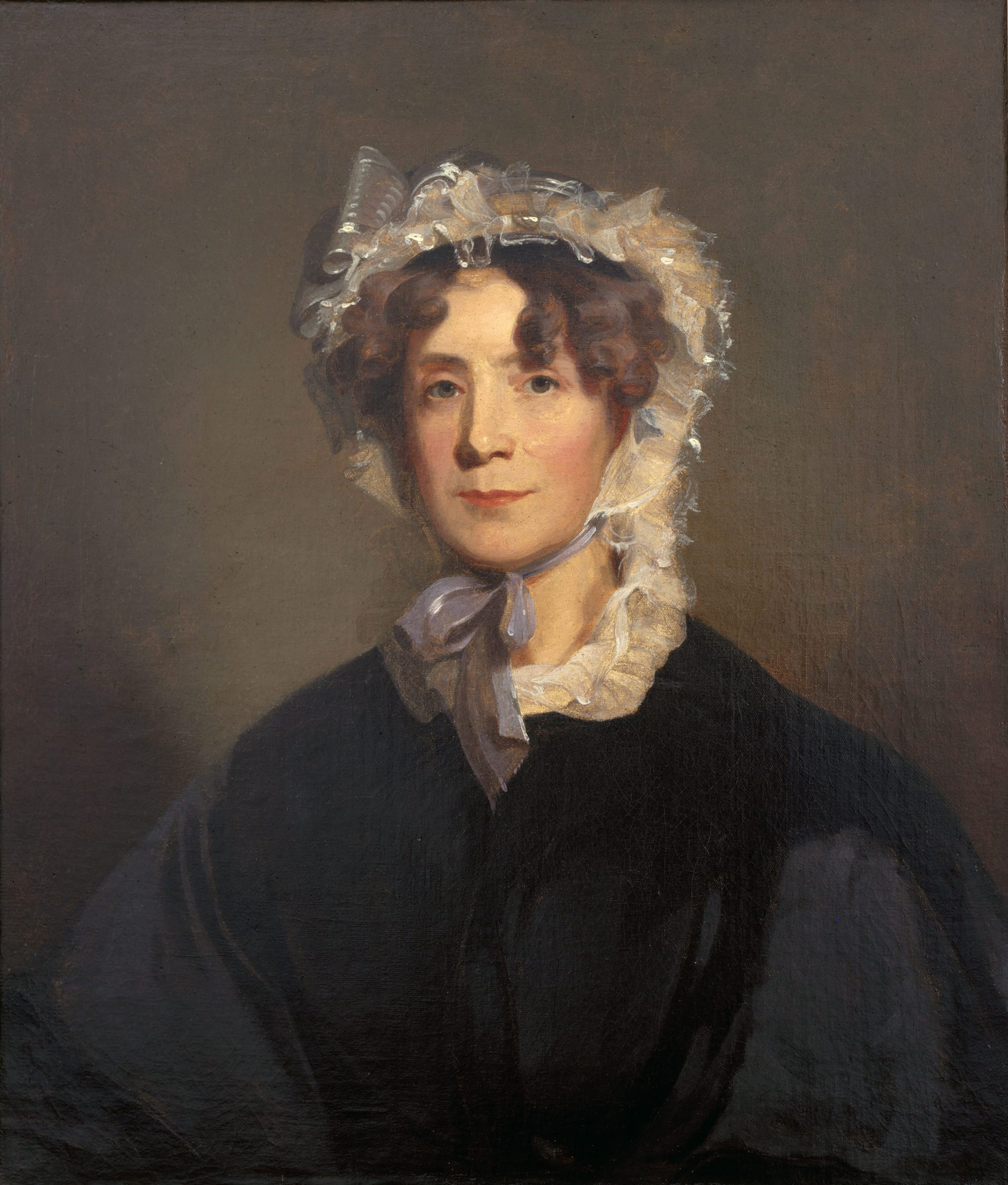
The Boston winter was harsh in 1835-36, and Martha left the house only twice between November and April. In May 1836, she left Boston to return to Edgehill, arriving there in July. During the journey, she stayed in Philadelphia for several weeks and had her portrait painted by Thomas Sully. I’ll put the portrait on the web page for this episode; you can find a link in the show notes.
After short stops in Baltimore and Washington, Martha made one last stop, at the Madisons’ estate, Montpelier. James Madison had died on June 28, and Dolley Madison had sent word to Martha that she wished for her old friend to come and comfort her. They stayed with Dolley for some time, before finally finishing their journey and arriving at Edgehill on July 25.
Martha spent an enjoyable summer at Edgehill, and she was in reasonably good health throughout the summer. But just as she was preparing to return to Boston in October, she was confined to bed with a terrible headache. Her children chalked it up to the stress and fatigue caused by packing and preparing to be separated from some of her children and grandchildren once again.
The next morning, October 10, Martha’s condition was worse. Cornelia sent for Jeff, presumably to summon a doctor, but before anything could be done, Martha suddenly died. Her children later recorded that she suffered from a brief spasm, and then sank forward, her face quite blue. Jeff wrote that Martha “died of apoplexy caused by the rush of blood to the head.” As we’ve learned in past episodes, in this time period, strokes were called apoplexy.
Martha Jefferson Randolph was 64 years old when she died. She was buried on October 12 in the family graveyard at Monticello, which the family had retained ownership of even after the sale of the estate.
Unlike Martha Washington and Abigail Adams, the published obituary for Martha Jefferson Randolph was quite short. Appearing in the Charlottesville Republican newspaper, it said only, “Died, suddenly, at the residence of Thomas Jefferson Randolph…Mrs. Martha Randolph, the widow of the late Thomas Mann Randolph, and the daughter of Thomas Jefferson. The character of this distinguished lady must be drawn by an abler hand than ours.”
Her children had more to say. After hearing the news of his mother’s death, George wrote to Jeff two days later, “Even now, I can hardly realize that I am without a mother. So accustomed am I to think of her, that there is a blank in my very existence which I can’t fill up.”
Ellen lamented the loss of “one who loved me better than any other being on earth.” She admired her mother for her “deep affection, her high principles, her generous & magnanimous temper, her widely diffused benevolence, her sound judgment and glowing imagination, her highly cultivated understanding and fascinating manners.”
Jeff wrote that Martha “possessed a mind strong and cultivated; mild and gentle temper; warm affection. … [She was] self-sacrificing in the discharge of her duties.”
A somewhat more objective appraisal of Martha was written by an old friend of Tom Randolph’s. In his memoirs he wrote that Martha was “decidedly the most accomplished woman I have ever known. [H]er person was tall, large, loosely made, and awkward, [and although] her face [was] not what would be esteemed beautiful, an expression of intelligence always animates her countenance, [and her] frankness and eloquence far above … any other person of her sex, give a charm to her manners. [Her] exemplary life, her devotion to the instruction of her children, and everything in her history [make her] one of the most interesting persons of the age.”
And that’s a wrap on the Marthas Jefferson. The mother never left Virginia and didn’t live to see her children grow up or her husband become president. The daughter was educated in Philadelphia and Paris, but ended up right back in Virginia, married to a plantation owner who was much like her father.
The mother was born in colonial America and died before the War of Independence had concluded. The daughter was also born in colonial America, but by the time she died, the United States of America had been through seven presidents, one of whom had been her father. The amount of change she lived through was remarkable, but through it all, her primary goal in life was to be a good mother to her children. And I think it’s safe to say that she accomplished that goal.
As has become the norm, I’m going to take a short break before we begin season 4. But this time I can’t say for sure how long that break will be. I wrote these words on December 3 and am recording them on December 15. But you won’t hear this episode until March 6.
To give you a little peek behind the scenes, I research and write an entire season before I record it. So by the time episode 1 of a given season goes live, the entire season is finished. It allows me to go back to earlier episodes and make adjustments as I write later episodes.
But I’m not sure I can research, write, and record and edit all of Dolley and James Madison’s episodes in the next 15 weeks. So for now, I’ll just say that I’m going to take at least two weeks off before we kick off season 4, but it could end up being more than two weeks. Not much more, I hope!
As always, thanks for listening to the podcast! This episode, like all others, was produced by me, and the music is by Matthew Dull. I’ll see you soon!